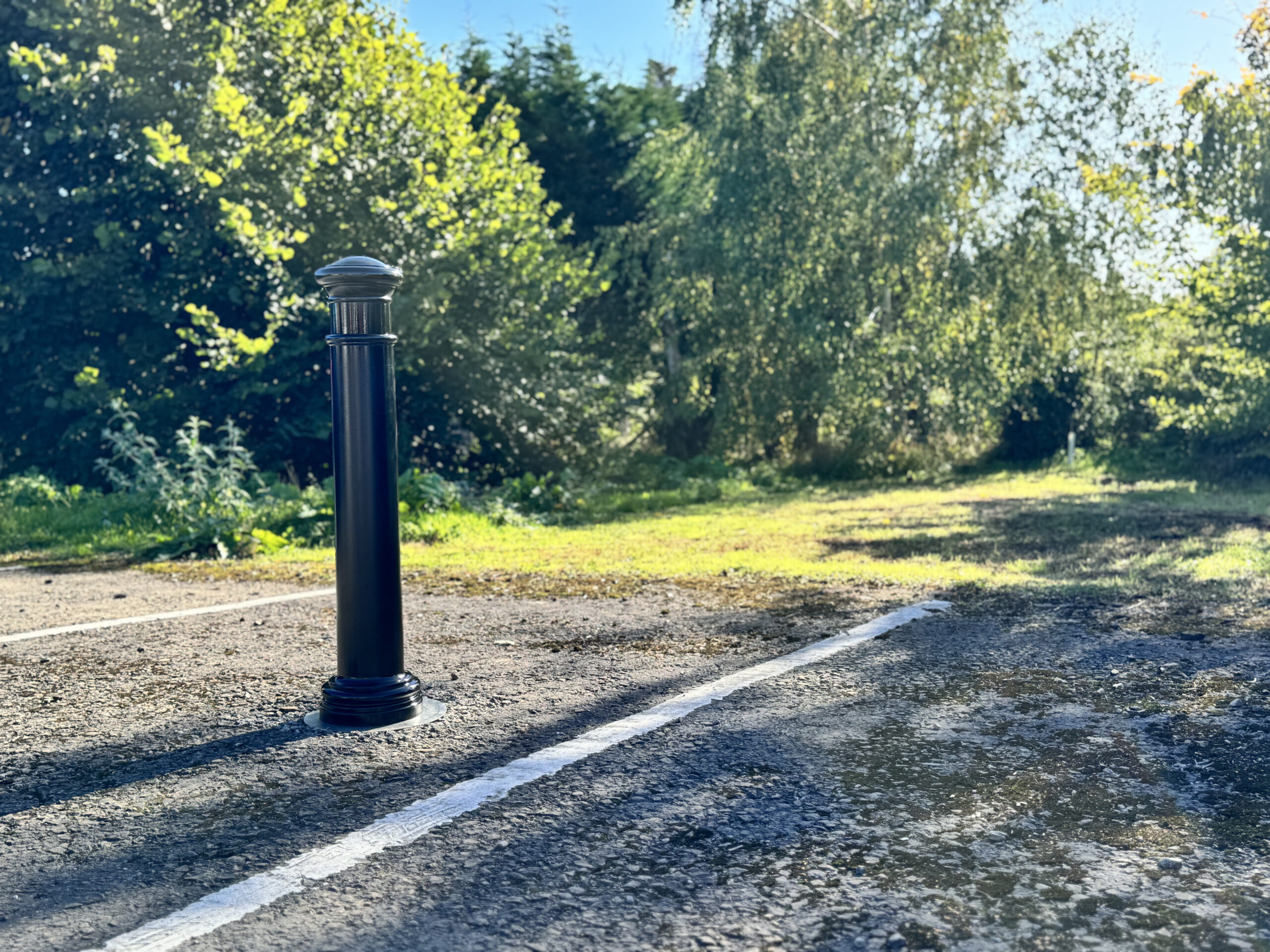
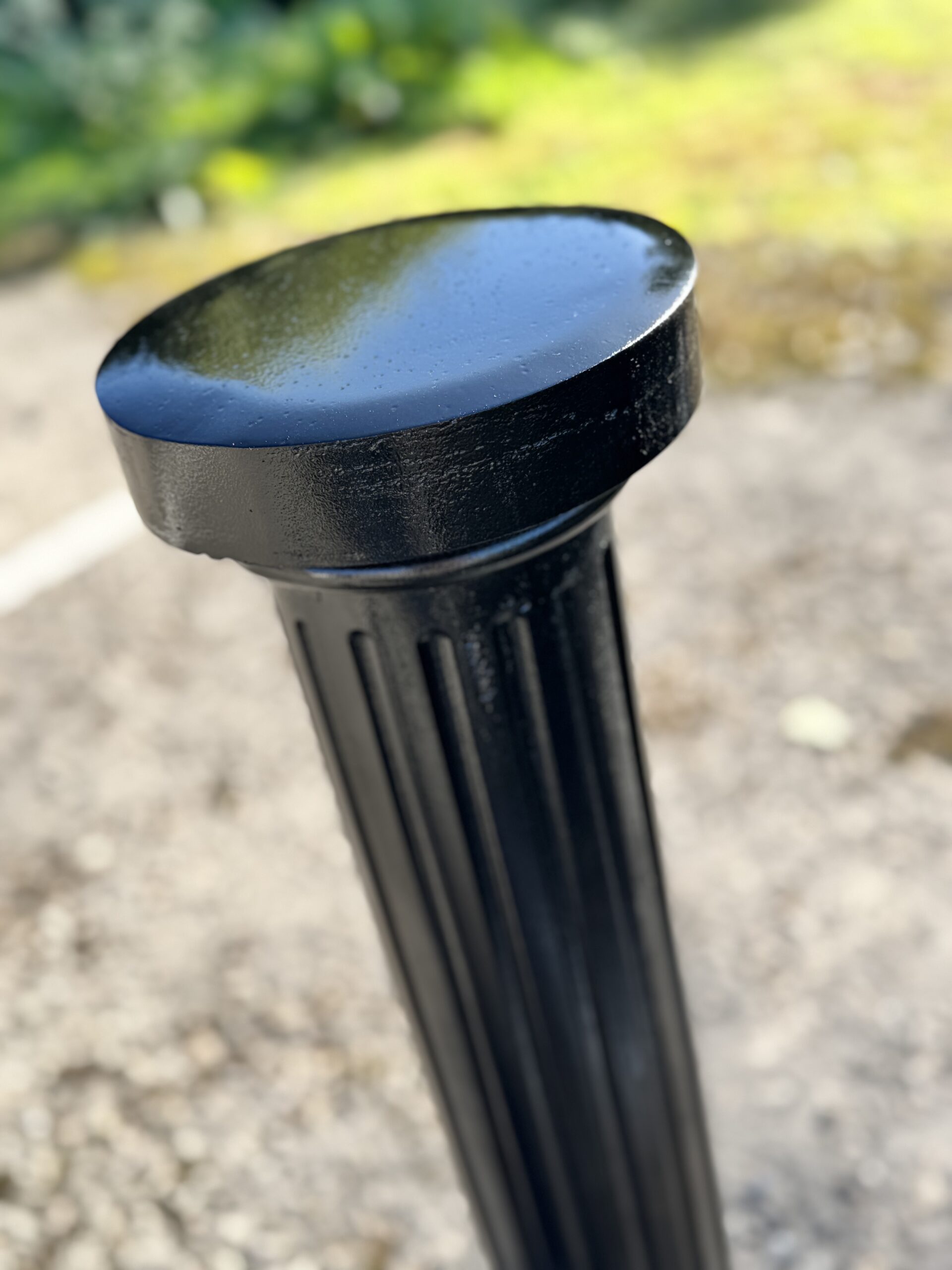

When specifying bollards for public spaces, car parks, or commercial environments, the choice of material is often treated as a simple cost decision but in practice, it’s really a performance decision. Polyurethane bollards are increasingly being selected not because they are the cheapest upfront option, but because they deliver consistent performance, have lower maintenance costs and a longer service life in real-world conditions.
One of the biggest advantages of polyurethane is how it handles impact. Traditional materials such as cast iron or steel are rigid so this mean that when they are struck, they either transfer the force into the ground or sustain visible damage themselves. Polyurethane behaves differently because it absorbs and dissipates impact energy, reducing the likelihood of cracking, chipping or a structural failure. We even have a specific Impact Flex range that flexes even further if hit and can rebound back to it’s original form even when driven over. So whether you need a rigid bollard or one that flexes, polyurethane can be produced in different hardnesses to suit.
This ability to absorb bumps makes it particularly effective in environments such as car parks, loading areas and pedestrian zones where minor collisions are common.
Low maintenance by design
Maintenance is where the long-term cost difference becomes obvious when comparing bollard material. Polyurethane bollards don’t require painting, are resistant to corrosion and maintain their appearance even in harsh outdoor environments including coastal locations.
When you compare that with traditional alternatives:
- Steel requires coating and ongoing corrosion management
- Cast iron can chip and needs repainting
- Timber degrades and requires treatment
Polyurethane removes much of this ongoing maintenance burden, making it particularly attractive for councils, facilities managers, and commercial sites managing large estates.
Weather, abrasion and time resistant
Outdoor street furniture is exposed to constant environmental stress from rain, UV exposure, temperature changes and physical wear all contributing to deterioration.
Polyurethane is inherently resistant to:
- Weathering
- Abrasion
- Chipping and surface damage
It also doesn’t corrode and is significantly lighter than traditional materials, making handling and installation easier while maintaining durability. This combination of properties means the bollard continues to perform and look consistent over time, rather than degrading unevenly.
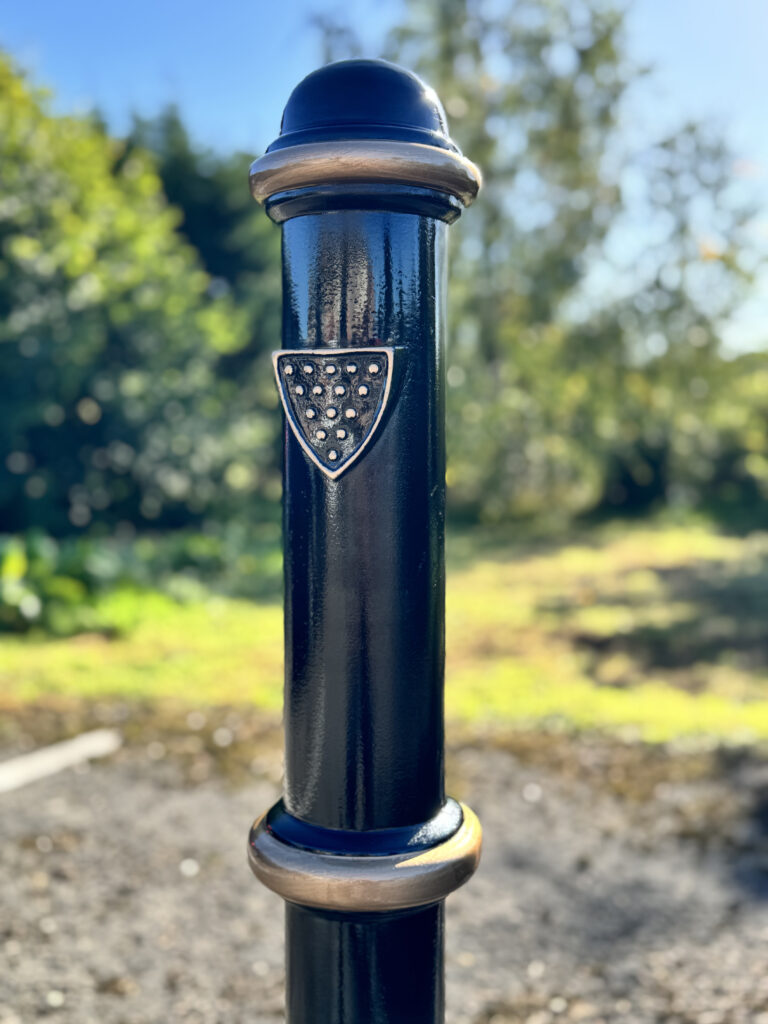 Flexibility in Design and Application
Modern urban environments demand more than just function. Bollards are also part of the visual landscape and this is where polyurethane comes into it’s own. It can be cast into a wide range of shapes and styles, allowing for both contemporary and heritage designs without compromising durability and bollards can even be created to match existing designs if only one needs replacing.
From simple, cost-effective solutions to more traditional styles with decorative detailing, polyurethane offers flexibility without sacrificing performance. At Watts, ranges such as Impact-Flex™, Street-wise, and Heritage demonstrate how the same core material can be adapted to very different use cases and aesthetic requirements.
Lightweight Without Compromising Strength
Weight is often overlooked, but it matters in both installation and performance. Polyurethane bollards are significantly lighter than traditional cast iron alternatives, while still maintaining structural integrity through reinforced cores where required.
This makes them:
- Easier to transport and install
- Safer to handle on-site
- More adaptable to different fixing methods
Customisation where it matters
We understand that no two environments are identical and your bollards often need to meet specific operational or visual requirements.
Polyurethane allows for:
- Custom finishes and colours
- Reflective banding options
- Different fixing methods (root fix, base plate, removable)
- Integration with rails or chains
Some ranges can also be tailored to specific client requirements, allowing projects to meet both functional and aesthetic goals.
The bigger picture: cost vs value
It’s easy to compare bollards on unit price alone. But that approach ignores the factors that actually drive cost over time:
- Maintenance
- Replacement cycles
- Installation effort
- Downtime from damage
Polyurethane performs strongly across all of these areas so what may even look like a higher upfront investment often becomes the lower-cost solution over the lifecycle of the product. Polyurethane bollards are not just an alternative to traditional materials, they represent a shift in how street furniture is specified. Instead of choosing based on initial cost, more organisations are choosing based on durability, maintenance, and long-term performance and that’s where polyurethane consistently proves its value.