This really was a project with a difference.
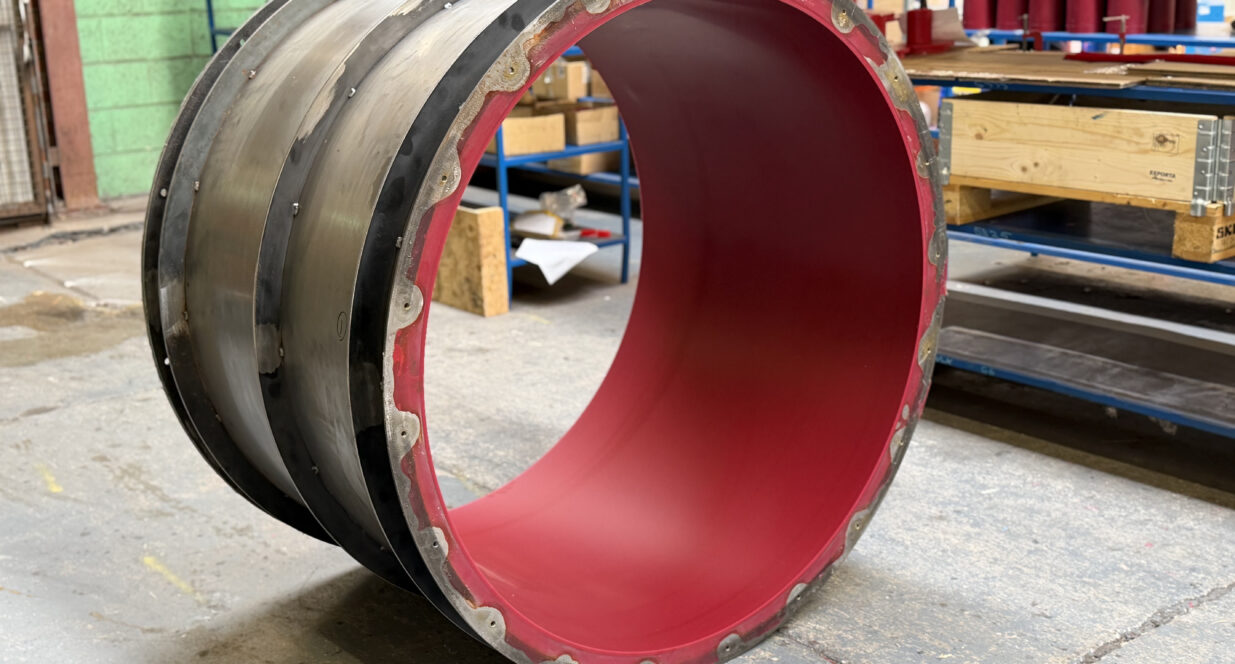
In the mining and quarrying sector, reliability is everything as equipment operates in abrasive, high-impact environments where downtime is costly and performance margins are tight. The drum featured here plays a critical role in the separation of precious metals and minerals, and its internal surface must meet exacting standards to function efficiently over time.
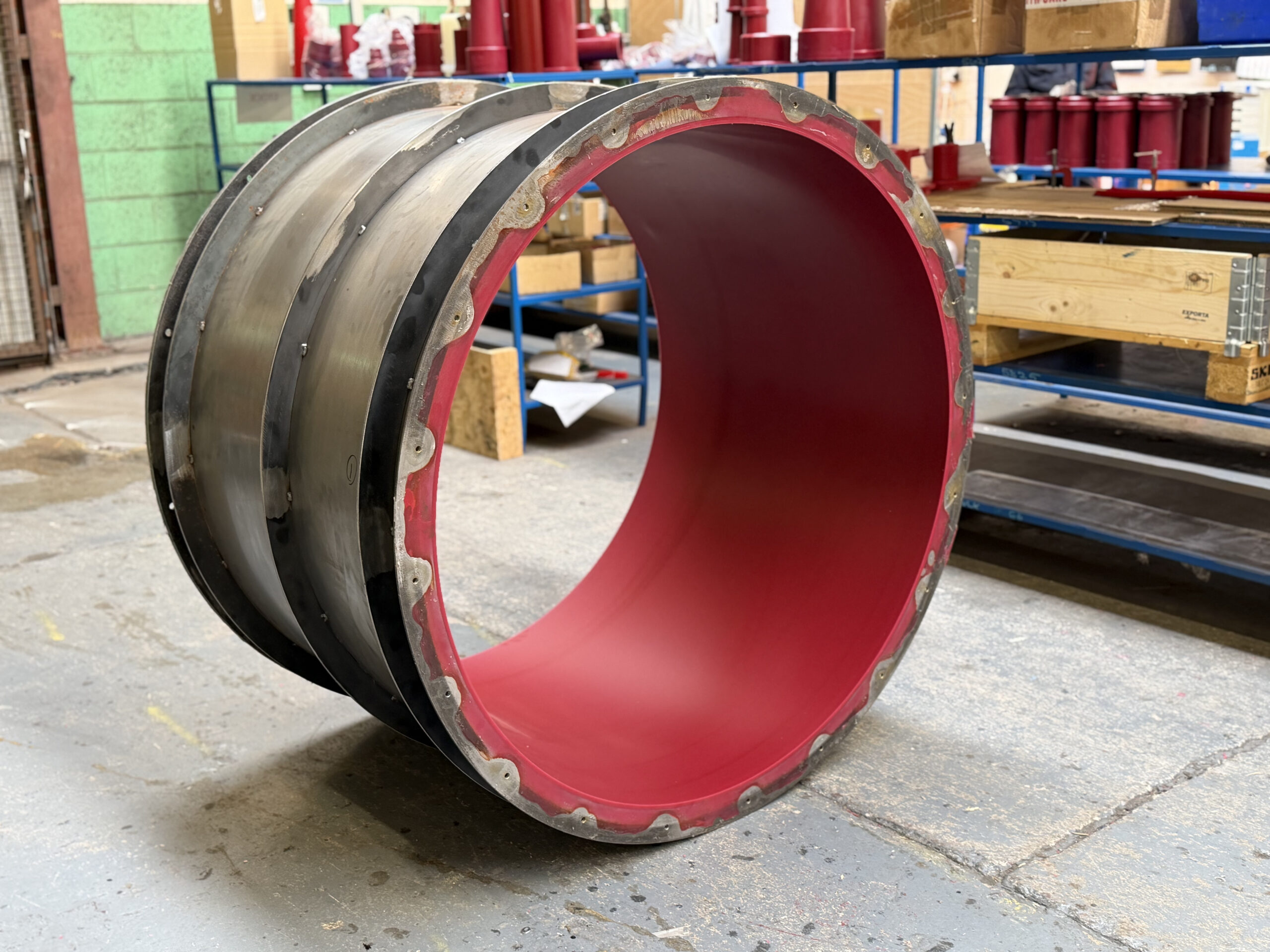
We were commissioned to line this tapered drum with a polyurethane coating that delivered two key outcomes of exceptional durability and an extremely smooth internal finish. Achieving both simultaneously is far from straightforward but it was a challenge we relished.
The Technical Challenge
Engineering-grade polyurethanes are selected for demanding applications because of their superior wear resistance, load-bearing capability and long service life. However, these same material properties can make them more difficult to process when a flawless surface finish is required especially on applications like this one.
Spray-applied polyurethane systems can produce a visually smooth surface but the trade-off is long-term performance. Spray materials typically don’t offer the same mechanical strength, abrasion resistance or longevity as cast engineering-grade systems either so this wasn’t an option. We had to come up with a solution that would be capable of operating in the harsh conditions of mineral processing, and compromise was not an option.
Developing a New Process
Rather than forcing a standard method to fit an unsuitable application, we stepped back and did what we do best… we innovated and used years of experience to come up with a solution.
Our engineering team designed a structured sequence of trials using smaller-scale units that replicated the geometry and taper of the full drum. Each iteration allowed us to refine the variables including material flow characteristics, mould design, rotational control and curing parameters.
Four full experimental rounds were completed and each phase generated data that informed the next adjustment. Minor changes in process temperature, casting dynamics and release methodology had measurable impacts on surface quality and consistency. And so by the end of the fourth trial, we had developed a controlled casting method that allowed us to retain the mechanical integrity of our engineering-grade polyurethane while producing the exceptionally smooth internal surface demanded by the customer.
Scaling Up With Confidence
With the process validated at small scale, it was then time to scale up to the full-size tapered drum. The result was a seamless, precision-finished lining that not only looked good but also met all of the functional requirements too. The surface smoothness was achieved without sacrificing durability and the finished drum delivered the abrasion resistance and structural integrity expected of a high-performance mining component.
Repeatable Quality
This project has now become the foundation for further drum lining work. The process we developed is not a one-off solution but a repeatable manufacturing approach built on experimentation, data and engineering experience. We are currently working on additional drums with the assurance that each unit will meet the same high standard.
At Watts Urethane Products, we specialise in solving problems that sit at the intersection of material science and real-world performance in order to create engineering solutions that work. And above all, when an application demands both durability and precision, we never compromise on materials.
If you have a challenging lining or polyurethane application, our team would be delighted to discuss it. You can call us on 01594 847150 or send us an email.